

After a brain injury, you might notice a loved one struggling to find the right words, even though they know what they want to say. Or perhaps their speech sounds slurred and mumbled, but the words themselves are correct. These different symptoms point to different conditions, which is why understanding aphasia vs dysphasia vs dysarthria is so important. Let’s break down what these signs mean in simple, clear terms.
What is Aphasia? The Challenge with Language
Aphasia is a language disorder. It’s important to know that aphasia does not affect a person’s intelligence. It just makes it hard for them to use words.
This condition can make it tough to speak, read, write, or understand what others are saying. The most common causes of aphasia are brain injuries and strokes, which result in speech problems. You can learn more about the distinction between speech and language disorders in our detailed guide.
Aphasia vs. Dysphasia: Are They Different?
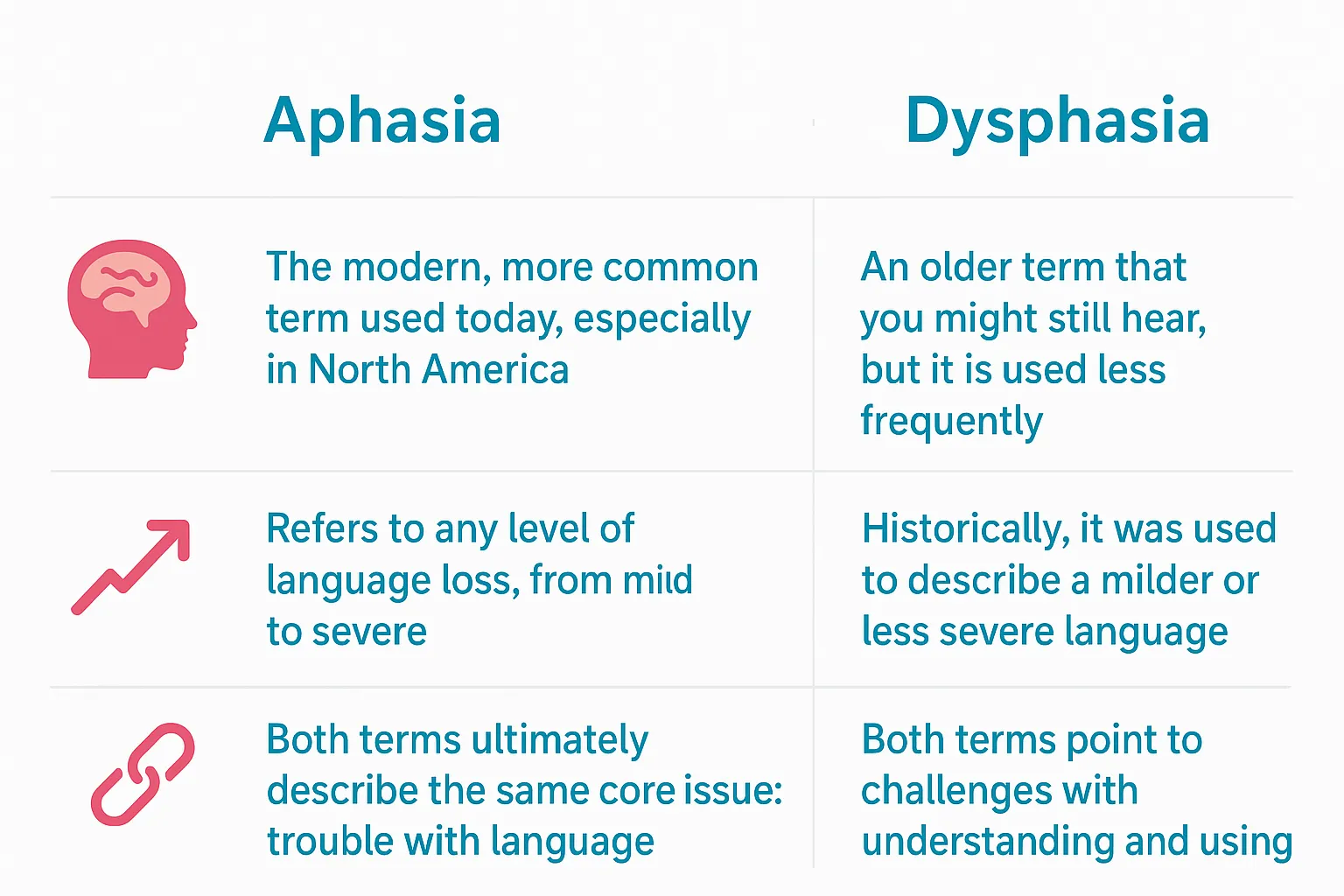
You might hear two different words: aphasia and dysphasia. This can be confusing, but they often mean the same thing. Both words describe a problem with language.
In North America, most experts now say “aphasia” for any type of language loss, big or small. The word “dysphasia” is an older term that was used for milder cases. So, if you hear either term, just know they both refer to trouble with language comprehension and speaking.
What is Dysarthria? A Problem with Speech Muscles
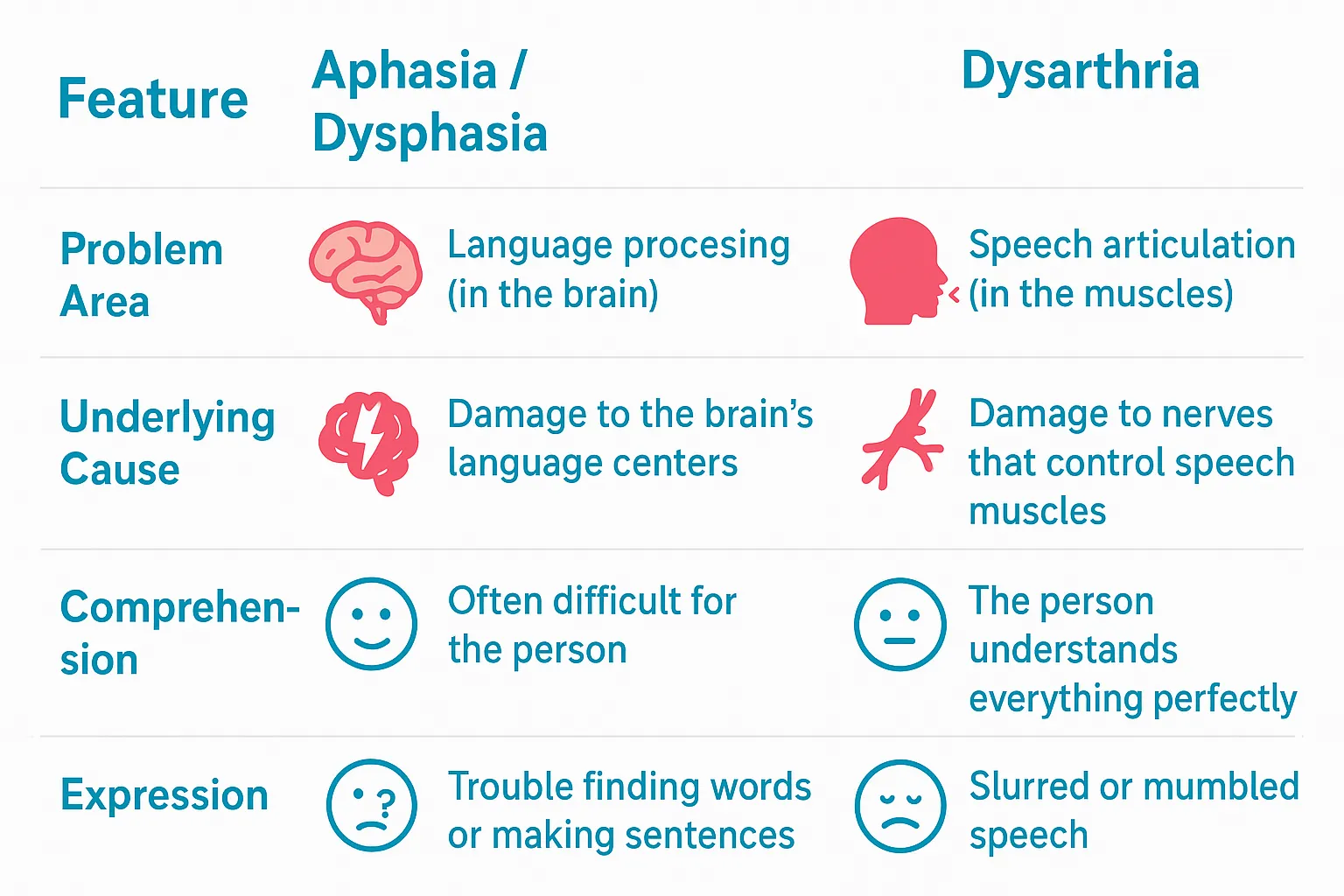
Now, let’s talk about dysarthria. Dysarthria is a motor speech disorder. This means the problem isn’t with finding the words, but with physically saying them.
A person with dysarthria knows exactly what they want to say. However, weakness in the muscles of the mouth, tongue, or jaw makes it hard to speak clearly.
This can lead to symptoms of dysarthria, like slurred or mumbled speech and other articulation disturbances. This condition can be caused by Parkinson’s disease, MS, or a brain tumor.
Contact us today to learn more or to book an assessment.
Quick Comparison: Aphasia vs Dysphasia vs Dysarthria
Sometimes, a simple chart makes things easier to understand. Here is a quick look at the main differences.
How a Speech Language Pathologist Can Help
Figuring out these conditions can be tough, but the good news is that help is available. A Speech Language Pathologist, or SLP, is a professional who can figure out the exact problem. They listen carefully and do special tests to understand what’s going on.
From there, they can create a plan to help. At Vancouver Speech Therapy, our caring therapists create personalized plans for every single client. The goal is always to make communication easier and build confidence.

Tailored Therapy for Lasting Results
Therapy is not a one-size-fits-all solution. For aphasia, therapy might focus on exercises to remember words and practice putting sentences together. For dysarthria, the focus would be on strengthening the muscles used for talking.
Every person’s journey is unique, and the therapy should be too. A tailored approach is key for complex conditions, just as it is for things like apraxia and dyspraxia.
Your Path Forward with Vancouver Speech Therapy
Hearing that you or a loved one has aphasia, dysphasia, or dysarthria can feel scary. But it’s important to remember that you don’t have to face it by yourself. With the right support, things can get better.
Understanding the difference between aphasia vs dysphasia vs dysarthria is a great first step. If you are ready to take the next one, the team at Vancouver Speech Therapy is here to help you.

Author: Aman Sahnan, M.S., R-SLP
Aman Sahnan is a Registered Speech and Language Pathologist who earned her Master’s in Speech Language Pathology from the University of Alberta. She has extensive experience helping both children and adults with a wide range of speech and language disorders in public and private settings.